
Fire Alarm Systems
Detection and notification systems designed to protect people first, property second.
Systems designed around life safety and code compliance
Fire alarm systems are held to a different standard than security systems — the goal is early detection and clear notification so people can get out safely, every time, without fail. We design systems around your building's occupancy, layout, and applicable fire code requirements, and coordinate with your local fire marshal's office where needed.
Our technicians handle the full lifecycle — design, installation, testing, and ongoing inspection — so the same team that put the system in is the one you call when it needs service.
- Device layout planned around your building's occupancy type
- Coordination with your local fire marshal where required
- Ongoing inspection and testing available after install
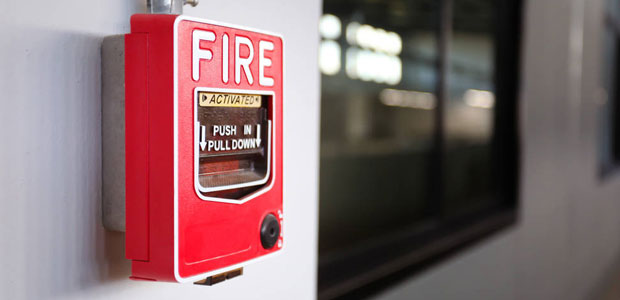
Initiating devices vs. notification appliances
A fire alarm system has two jobs: notice a problem, and tell everyone about it. These are the devices that do each.
Initiating devices (notice the problem)
- Smoke detectors
- Heat detectors
- Manual pull stations
- Duct detectors (HVAC systems)
- Sprinkler flow & tamper switches
Notification appliances (tell everyone)
- Horns
- Strobe lights
- Combination horn/strobes
- Speaker strobes for voice evacuation messages
Conventional vs. addressable
| Panel type | How it works | Best for |
|---|---|---|
| Conventional | Devices grouped into zones — the panel tells you which zone triggered | Smaller buildings, simpler layouts |
| Addressable | Every device has its own address — the panel identifies the exact device | Larger buildings, faster troubleshooting, easier expansion |
The right choice depends on building size, occupancy, and budget — we'll walk through the tradeoffs during design.
A fire alarm is only as good as who it reaches
Central-station monitoring
An alarm signal reaches a monitoring center that can initiate an emergency response, so the building is covered even when it's unoccupied.
Battery-backed reporting
Panels report over a supervised connection with battery backup, so monitoring stays active through a power interruption.
From code review to a tested, certified system
Assess
Review occupancy type, layout, and applicable code requirements.
Design
Device placement and panel type planned to fit the building.
Install & Test
Full installation followed by system testing before sign-off.
Ongoing Inspection
Scheduled testing to help keep the system in proper working order.